
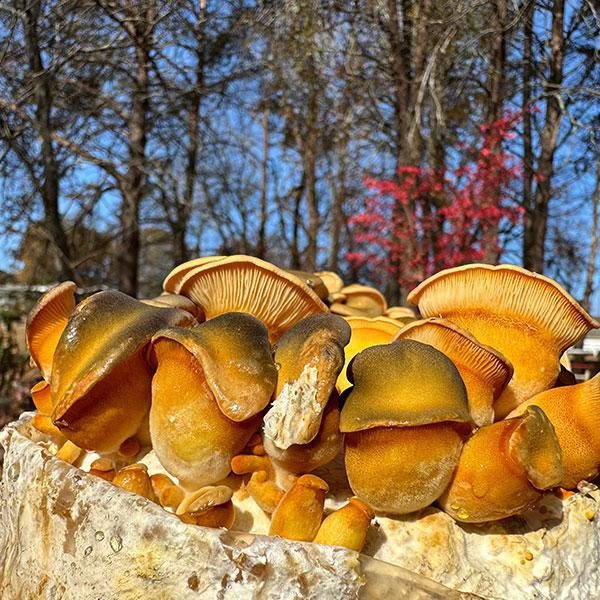
Late Fall Olive Oysterling / Mukitake Plug Spawn - (Sarcomyxa serotina)
Late Fall Olive Oysterling / Mukitake Plug Spawn - (Sarcomyxa serotina)
Couldn't load pickup availability

(Sarcomyxa serotina)
Grow a Beautiful Cold-Weather Gourmet Mushroom on Hardwood Logs
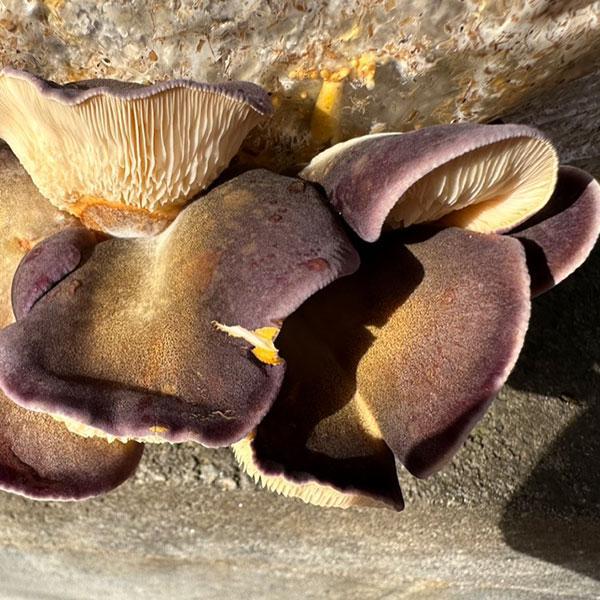
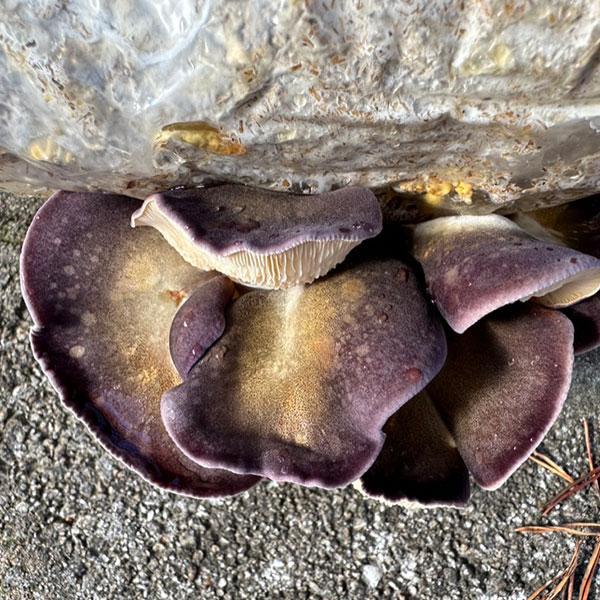
Mukitake, also known as the Late Fall Olive Oysterling, is a striking woodland mushroom with olive-green, yellow, violet, and purple tones that can make each cap look almost galaxy-colored.
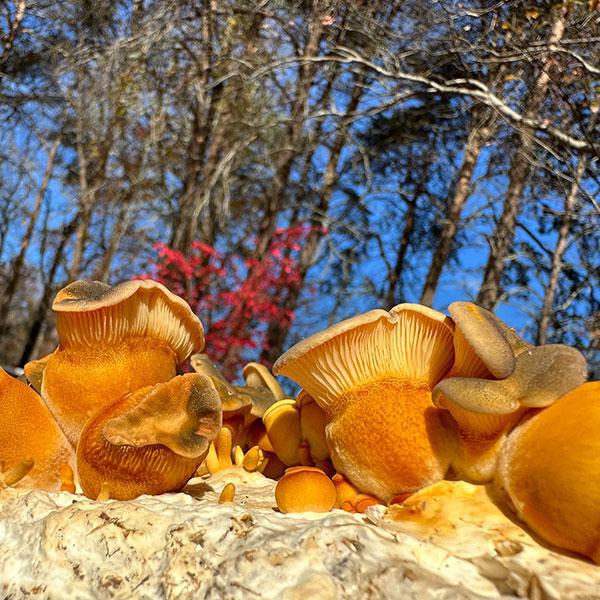
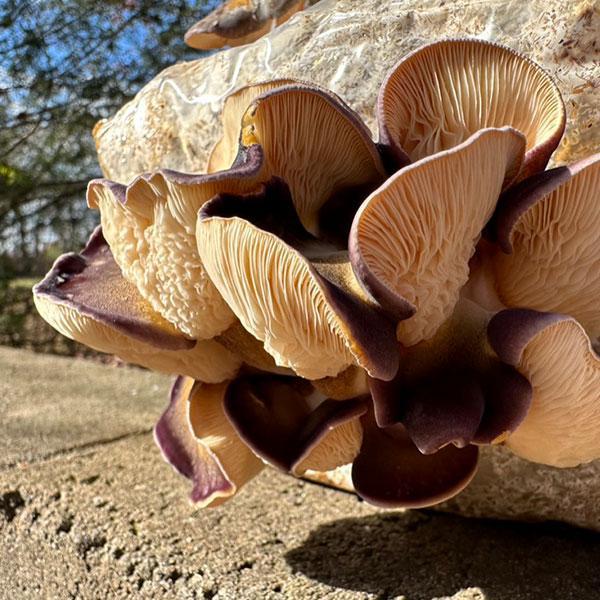
Although its shelf-like shape resembles an oyster mushroom, Mukitake is not a true oyster. It produces tightly packed yellow gills and a thick, buttery texture that makes it one of the most memorable mushrooms of the late fall season.
Each package includes approximately 100 colonized hardwood plugs by weight, ready to inoculate freshly cut hardwood logs for long-term outdoor cultivation.
🌱 Why You’ll Love It
- 🍄 Beautiful olive, violet, yellow, and purple coloration
- ❄️ Fruits during cold late-fall and early-winter weather
- 🥘 Savory, meaty flavor with a buttery texture
- 🌳 Grows on several common hardwood species
- 🍂 Extends the outdoor mushroom harvest into October, November, and December
Why Grow Mukitake Mushrooms?
Mukitake is an excellent choice for growers looking for an unusual gourmet mushroom that fruits when many other cultivated species have finished for the year.
It is valued because it is:
❄️ A True Cold-Weather Fruiter
Mukitake produces its best color and heaviest yields when temperatures fall below approximately 55°F.
🍄 Exceptionally Beautiful
The caps can display greenish-yellow, olive, violet, and purple hues, while the underside develops tightly packed yellow gills.
🍽️ Delicious When Properly Cooked
Mukitake has a savory, meaty, slightly sweet flavor with a soft, buttery texture.
🌳 Well Suited to Hardwood Logs
It can be cultivated outdoors on several broadleaf hardwood species using the raft method after colonization.
🍽️ What Does Mukitake Taste Like?
Mukitake mushrooms have a:
- Savory flavor
- Meaty character
- Slight natural sweetness
- Rich, buttery texture
They are excellent:
- Sautéed
- Added to soups and stews
- Cooked into sauces
- Served over rice or grains
- Added to noodle dishes
- Paired with roasted vegetables
- Cooked with meat or poultry
Mukitake can taste bitter when undercooked. For the best flavor and texture, cook it thoroughly for at least 15 minutes.
🌳 Where Can I Grow It?
Mukitake grows outdoors on broadleaf hardwood logs, including:
- Sugar maple
- Beech
- Oak
- Black cherry
- Other suitable hardwood species
It may occasionally occur on conifer wood in the wild, but hardwood logs are the recommended choice for cultivation.
For best results:
- Use healthy, freshly cut hardwood logs.
- Keep the logs in a shaded, humid area during colonization.
- Arrange the mature logs together on the ground using the raft method.
- Maintain consistent moisture and protect the wood from drying out.
Mukitake thrives in humid conditions, especially as temperatures cool.
What Makes It Special?
Mukitake stands apart from many other cultivated mushrooms because of its unusual combination of color, texture, and fruiting season.
When temperatures remain cold:
- Caps develop their desired olive and violet coloration.
- Fruiting can be especially abundant below 55°F.
- Harvests may continue into early winter.
- The thick caps develop a satisfying, buttery consistency.
When conditions are too warm, the developing mushrooms may appear more yellow and may not develop their characteristic purple-olive tones.
What to Expect
- Outdoor logs typically require approximately 18 months to colonize before their first harvest.
- Mukitake generally fruits from October through December, depending on climate.
- Preferred fruiting temperatures are approximately 32–55°F.
- High humidity is important for successful fruiting.
- The raft method is recommended after the logs are fully colonized.
- Properly maintained logs may continue producing for several seasons.
Mukitake takes longer to establish than many oyster mushrooms, but its cold-season harvest and exceptional culinary texture make it worth the wait.
🍄 How to Grow: Quick Overview
- Select healthy, freshly cut hardwood logs.
- Drill holes in a diamond pattern around each log.
- Insert one colonized plug into each hole.
- Seal the holes with wax.
- Place the logs in a shaded, humid outdoor location.
- Allow approximately 18 months for colonization.
- Arrange the mature logs together on the ground like a raft.
- Maintain moisture and watch for fruiting during cold late-fall weather.
Shipping & Freshness
- Includes approximately 100 colonized plugs by weight
- Available year-round
- Produced fresh for vigorous colonization
- Refrigerate until ready to use
- Do not freeze
📚 Need Help Getting Started?
ARTICLES
-
Ultimate Guides: Growing Mushrooms on Logs
-
Log Mushroom Cultivation Troubleshooting Guide
- Zone Fruiting Map
INSTRUCTIONS
