
Turkey Tail Plugs - (Trametes versicolor)
Turkey Tail Plugs - (Trametes versicolor)
Couldn't load pickup availability

(Trametes versicolor)
Grow One of the Forest’s Most Beautiful Medicinal Mushrooms
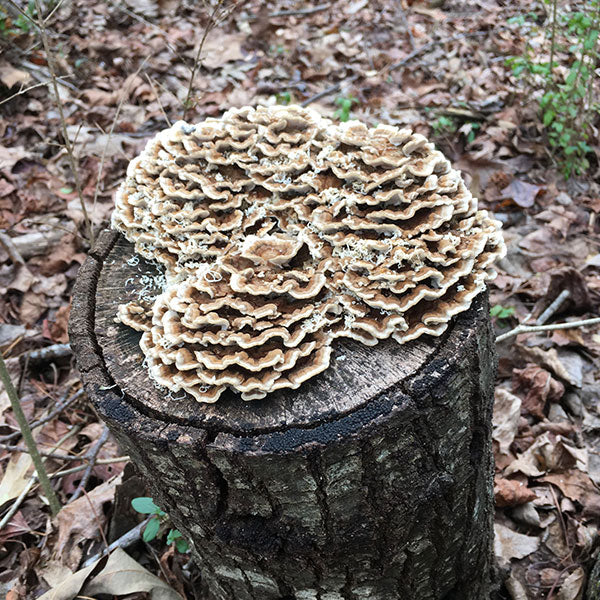
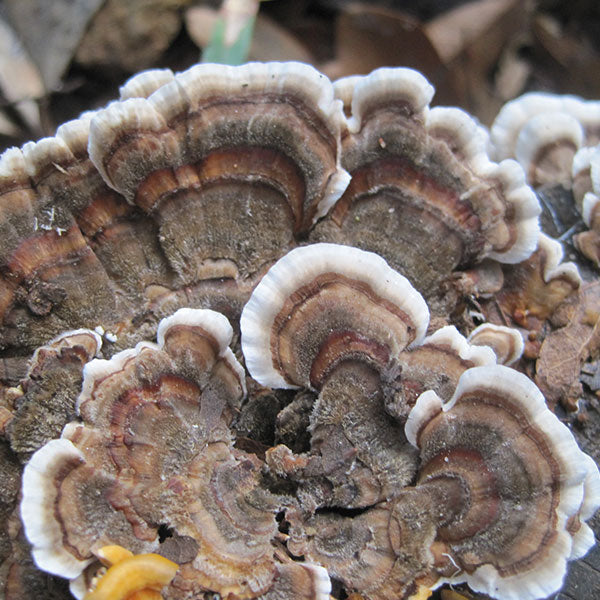
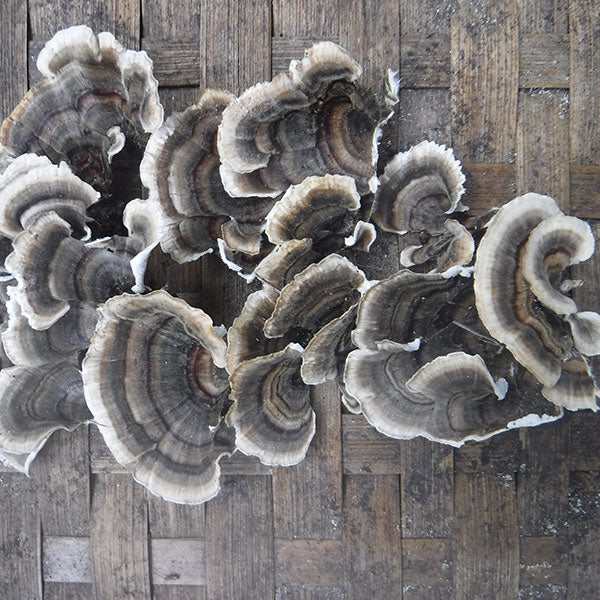
Turkey Tail is a colorful, wood-loving mushroom named for the layered bands that resemble the fanned tail of a wild turkey. Its thin, leathery caps may display shades of brown, cream, gray, blue, rust, and black, making every cluster a little different.
Each package includes approximately 100 colonized hardwood plugs by weight, ready to inoculate freshly cut hardwood logs or stumps.
Turkey Tail is not grown as a traditional cooking mushroom because of its tough texture. Instead, the fruiting bodies are commonly dried and used in teas, broths, powders, tinctures, and mushroom extracts.
🌱 Why You’ll Love It
- 🍄 Produces beautiful, multicolored shelf-like mushrooms
- 🌳 Grows on many different hardwood species
- 🌿 Well suited to outdoor logs and stumps
- 🍵 Traditionally prepared as tea, powder, or extract
- 🌎 Helps gradually break down wood and return nutrients to the soil
Why Grow Turkey Tail Mushrooms?
Turkey Tail is one of the most recognizable mushrooms found in temperate forests around the world.
It is loved because it is:
🎨 Naturally Beautiful
Each fruiting body develops colorful concentric bands, creating layered clusters that resemble small woodland fans.
🌳 Adaptable
Turkey Tail grows on a wide range of hardwood logs and stumps, making it a practical choice for many outdoor cultivation projects.
🍵 Useful for Home Preparations
Because the mushrooms are thin and tough, they are generally dried and prepared as teas, broths, powders, tinctures, or extracts.
🌿 An Excellent Wood Decomposer
Turkey Tail mycelium helps break down dead wood and gradually return organic matter to the surrounding soil.
🍵 What Does Turkey Tail Taste Like?
Turkey Tail has a mild, earthy flavor that may have a slightly sweet finish.
Its texture is:
- Thin
- Tough
- Leathery
- Not suitable for eating like a tender culinary mushroom
Turkey Tail is most commonly:
- Simmered into tea or broth
- Dried and ground into powder
- Made into tinctures
- Used in dual extracts
- Added to long-simmered herbal preparations
The solid mushroom pieces are usually strained out after simmering.
🌳 Where Can I Grow It?
Turkey Tail grows on many hardwood logs and stumps, including: Alder, Ash, Aspen, Beech, Birch, Chestnut, Cherry, Elm, Eucalyptus, Hickory, Honey Locust, Ironwood, Maple, Oak, Pecan, Plum, Poplar, Sweetgum, Walnut
Use healthy, freshly cut wood before competing fungi become firmly established.
What Makes It Special?
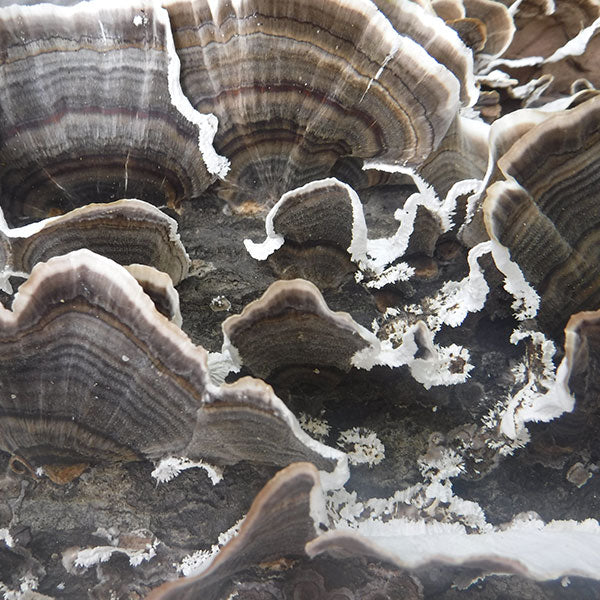
Turkey Tail produces thin, overlapping shelves with distinctive bands of color.
Depending on genetics, wood, moisture, and growing conditions, the fruiting bodies may include:
- Cream
- Tan
- Brown
- Rust
- Gray
- Blue-gray
- Nearly black bands
The mushrooms often remain visible for months and may persist through winter after fruiting in late summer or fall.
Because many small bracket fungi resemble one another, carefully confirm identification before using any harvested mushroom.
What to Expect
- Turkey Tail logs commonly require approximately 8–12 months or longer to colonize.
- Fruiting often begins during warm, humid weather.
- Wild Turkey Tail commonly appears from late summer into fall and may persist through winter.
- Established logs may continue producing for several seasons.
- Fruiting time depends on log size, wood species, moisture, climate, and inoculation conditions.
Turkey Tail is naturally vigorous, but outdoor mushroom cultivation always requires patience.
🍄 How to Grow: Quick Overview
- Select healthy, freshly cut hardwood logs or stumps.
- Drill holes in a diamond pattern around the wood.
- Insert one colonized plug into each hole.
- Seal each inoculation point with wax.
- Place the logs in a shaded, humid outdoor location.
- Keep the wood from drying out during colonization.
- Watch for thin, colorful shelves during favorable seasonal conditions.
Logs may be stacked, leaned, or placed close to the ground where they can retain moisture.
Shipping & Freshness
- Includes approximately 100 colonized plugs by weight
- Available year-round
- Produced fresh for vigorous colonization
- Refrigerate until ready to use
- Do not freeze
📚 Need Help Getting Started?
ARTICLES
- Best Mushrooms for Anxiety - Top 5 Medicinal Mushrooms for Stress Relief
- Magical Benefits of Turkey Tail
- Ultimate Guides: Growing Mushrooms on Logs
-
Log Mushroom Cultivation Troubleshooting Guide
- Zone Fruiting Map
INSTRUCTIONS
