

Wild Mushroom Foraging Certification Course (SC, NC, GA, VA, AL, PA, NY, RI) – 5-Year State-Approved Permit Training - Jun 13-14, 2026
Wild Mushroom Foraging Certification Course (SC, NC, GA, VA, AL, PA, NY, RI) – 5-Year State-Approved Permit Training - Jun 13-14, 2026
Couldn't load pickup availability
Earn your 5-year Wild Mushroom Foraging Permit, meeting the requirements set by state health departments and formally approved for the legal foraging and sale of wild mushrooms in the following states: South Carolina, North Carolina, Georgia, Virginia, Pennsylvania, New York, and Rhode Island.
Registered participants will receive emailed study guides and slide materials approximately one month prior to the class. All examinations will be administered onsite.
Class size is limited to 40 participants. Due to the regulatory nature of this certification, no refunds are available. In the event of an emergency, we may be able to transfer your registration to a future session.
Location
Agroforestry Resource Center
6055 NY-23
Acra, NY 12405
Operated by Cornell Cooperative Extension, the Agroforestry Resource Center is a regional hub for education, demonstration, and research focused on the benefits of woodlands to people, waterways, wildlife, and long-term land stewardship. Programs at the Center emphasize the ecological, economic, and human health value of forested landscapes, making it an ideal setting for this certification course.
Please respect the space:
- Students should remain in conference, restroom, and kitchen areas only
- No smoking is permitted anywhere on the property
- COVID safety protocols will be evaluated as conditions evolve; any requirements will be communicated prior to the class
- Participants may arrive no more than 15 minutes before class to allow instructors adequate setup time
Dates & Hours
June 13–14, 2026
Saturday & Sunday, 9:00 AM – 5:00 PM (EST)
Suggested Accommodations
-
Hotel Vienna – Windham, NY
https://www.thehotelvienna.com/
518-734-5300 | info@thehotelvienna.com -
Captain’s Inn Point Lookout – East Windham, NY
http://captainsinnpointlookout.com/
518-750-8436 -
Winwood Inn – Windham, NY
https://www.windhammountain.com/lodging/rooms-rates/
518-734-3000 -
Greene County Tourism (Lodging Directory)
https://www.greatnortherncatskills.com/resorts-lodging/hotels-motels
Instructor
Christine Gagnon
Christine Gagnon was first introduced to edible wild mushrooms as a child in Quebec, but her focused study of mushroom identification began in 2018—when she immersed herself fully in learning fungal taxonomy, ecology, and safe identification practices.
Christine holds a degree in Art Education from the Massachusetts College of Art and now applies her teaching background to mushroom education. She is the founder of the Uncanoonuc Foraging Company, where she leads group and private foraging walks across multiple states, introducing participants to the world of culinary mushrooms. She is also a co-founder of NH Myco Weekend, a regional gathering for mushroom enthusiasts and educators.
Her philosophy centers on humility, curiosity, and community: no matter how much one knows, there is always more to learn—and always others who can teach us something new.
Christine lives in New Hampshire with her husband Paul, a potter, and their two dogs. She is also the mother of three adult children and is enjoying life as an empty nester. Her work has been featured on NH Chronicle, NHPR, NPR’s Here and Now, Diary of a Nation Podcast, and The Hippo.
Additional Regulatory Information
This permit may be recognized in additional states that have adopted Code 13 policies. States interested in accepting this certification must contact Mushroom Mountain for review and approval by their food safety authority.
Approved Species & Legal Requirements
Under state law, all wild-foraged mushrooms offered for sale must be individually inspected and verified as safe by an approved mushroom identification expert who:
(A) Has demonstrated the required knowledge and passed the examination, and
(B) Harvests only species approved by the state (always verify your state’s current approved list).
Approved species covered in this course include:
- Chanterelles (Cantharellus spp., excluding C. persicinus)
- Blue Chanterelle (Polyozellus multiplex)
- Morels (Morchella spp.)
- Black Trumpet (Craterellus fallax)
- Lobster Mushroom (Hypomyces lactifluorum)
- Wood Ears (Auricularia spp.)
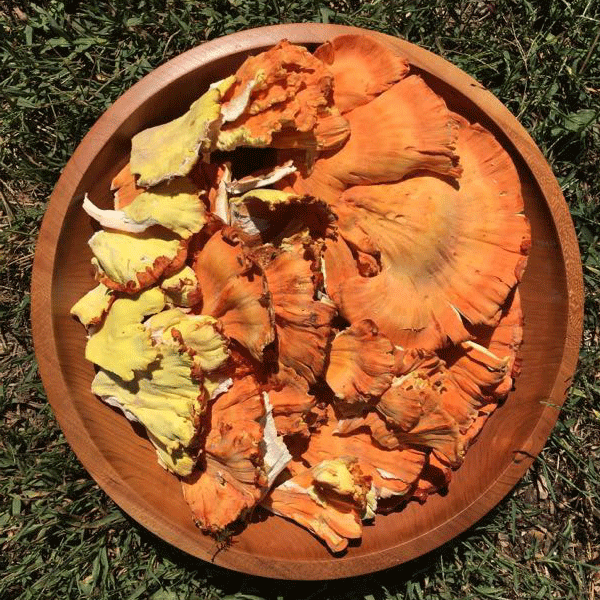
- Chicken of the Woods (Laetiporus spp., excluding L. persicinus)
- Beefsteak (Fistulina hepatica)
- Hedgehog (Hydnum repandum, H. albomagnum)
- Lion’s Mane / Pom Pom / Bear’s Head (Hericium spp.)
- Oyster Mushrooms (Pleurotus spp., excluding P. levis, P. dryinus)
- Cauliflower Mushroom (Sparassis spp.)
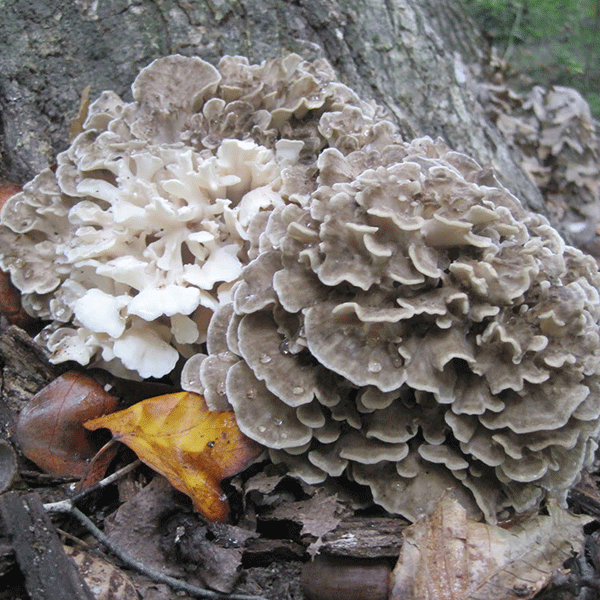
- Maitake / Hen of the Woods (Grifola frondosa)
- Blewit (Lepista nuda)
- Honey Mushroom (Armillaria mellea, A. tabescens)
- Blue Milky (Lactarius indigo)
- Golden & Burgundy Milkies (Lactarius corrugis, L. volemus, L. hygrophoroides)
- Pecan Truffle (Tuber spp.)
- Puffballs (Lycoperdon spp., Calvatia spp.)
- King Bolete / Porcini (Boletus edulis, B. chippewaensis)
- Chaga (Inonotus obliquus)
- Reishi (Ganoderma curtisii, G. tsugae, G. sessile)
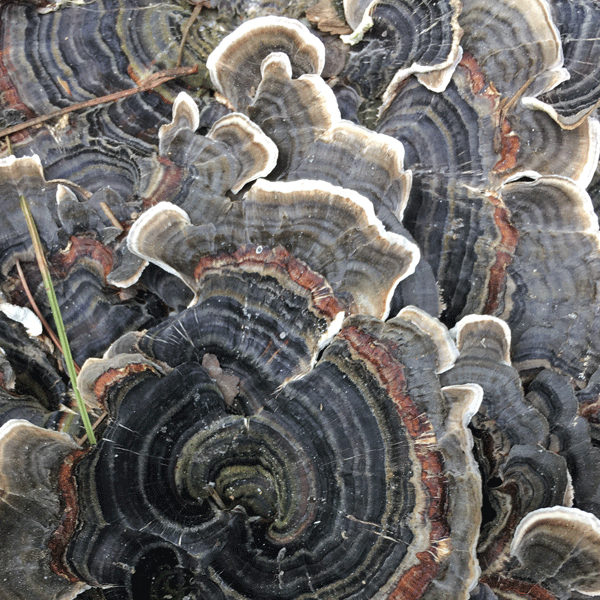
- Turkey Tail (Trametes versicolor)
- Matsutake (Tricholoma magnivelare)
- Shaggy Mane (Coprinus comatus)
- Candy Cap (Lactarius rubidus, L. fragilis, L. camphoratus)
- Saffron Milky (Lactarius deliciosus)
- Hawk’s Wing (Sarcodon imbricatus)
- Enoki (Flammulina velutipes)
- Shrimp Russula (Russula xerampelina)
- Umbrella Polypore (Cladomeris umbellata)
- Green Quilted Russula (Russula virescens, R. parvovirescens, R. crustosa)